

A car headrest, a light switch, a nickel, a bookcase that swings open like a door: people have hidden safes and valuables in some very odd places. Here are eleven of them, the history behind each, and an honest line on what each one stops and what it doesn’t.
1874
a Boston inventor patents a bed with a secret compartment for valuables
1953
a Brooklyn newspaper boy drops a nickel and it splits open, with a spy’s message inside
2 in 3
experienced burglars in a UK study described a search that starts in the main bedroom
9 min
how often, on average, a gun is stolen from a car in US cities that report to the FBI
Key takeaways
- A hiding place and a safe do different jobs. The hiding place keeps a thief from finding it; the steel decides what happens once they have.
- Burglars know the usual spots. In a US TV station’s survey of convicted burglars, one listed the freezer, the toilet tank, bookshelves and cereal boxes as places he’d check, and they said they head for the main bedroom first.
- The odder the place, the better it works, as long as it isn’t in the bedroom and it isn’t the first thing a search would turn up.
- Most hidden safes carry no burglary or fire rating at all, so keep anything irreplaceable in a rated safe that’s bolted down, and hide that instead.
- Tell someone you trust where it is. A hiding place that dies with you is a loss, not a security measure.
In This Article
The short answer
A hidden safe is any safe, box or compartment that relies on not being found. Some are real safes put somewhere nobody would think to look, like a wall safe behind a picture. Others aren’t safes at all: a hollow book, a fake tin of beans, a socket that doesn’t switch anything on. They’re sold as “diversion safes” or “concealment furniture”, and they work on a different principle from a steel box with a rating.
The list below runs from a car seat to the walls of a Tudor house. For each one we’ve given a sourced bit of history where we could find it, what it’s good for and where it falls short. Where a modern product does the job, we name it with its price; we haven’t tested any of them, and every figure comes from the maker’s or seller’s own page.
All eleven at a glance
| Hiding place | Good against | Weak against | Cost to try |
|---|---|---|---|
| Car headrest | A grab through a car window | The whole car being stolen | $349 to $399 |
| Hollow coin | Anyone who isn’t looking for it | Being dropped, spent or lost | Rarely sold |
| Light switch or socket | A quick search | Anything bigger than cash | Cheap, but not from the safe dealers we checked |
| Tin, book or cereal box | Children and visitors | Burglars, who check kitchens | About $51 for a steel book box |
| Fireplace | A search that skips the masonry | Heat, unless it’s built for it | A builder’s job |
| Behind a picture | Visitors | Anyone who has seen a film | About $250 to $800 |
| Behind a bookcase | A search of the room | Being found, then forced | From $1,000 for the door |
| Inside furniture | A search of the drawers | The piece being carried off | From about $130 |
| In or under the bed | A child, a guest | A burglar, who starts in the bedroom | $479 to $1,400 |
| Under the floor | Being carried away | Damp, and being hard to reach | About $850, plus fitting |
| In the walls: a hide | A determined search, if it’s built well | A builder who knows the trick | A builder’s job |
1. In the car headrest
Of all the places on this list, this is the one nobody looks at twice. The Headrest Safe, made by a company in Homewood, Alabama, swaps the headrest on a car or truck seat for one with a steel box inside. From the outside it looks like the headrest it replaced; you unlock it, then “pull down on the invisible seam” at the back.12 Its posts fit most two-post headrest mounts, and once it’s in, a toggle bolt opens inside the seat so the headrest can’t be pulled out until the safe is unlocked.1
There are three models, each sold as a pair: the safe and a plain matching headrest for the other seat, so the two look the same.
| Model | Inside, H x W x L | Steel | Lock | Price per pair |
|---|---|---|---|---|
| Compact | 5.5 x 3.5 x 7.5 in | 20 gauge box, 16 gauge door | Keypad, “hotel style” | $3493 |
| Vulcan | 6 x 3.5 x 8.5 in | 18 gauge box, 16 gauge door | Fingerprint, keypad or key | $3794 |
| Slide | 6 x 3.25 x 7.5 in | 18 gauge box, 16 gauge door | Fingerprint, keypad or key | $3995 |
The Vulcan is the flagship, built for trucks and SUVs and fitted to the passenger seat so the driver can reach it. The Compact is the smaller, symmetrical one for saloons. The Slide is the clever one: the inner safe slides out of the headrest, so you can take it with you, and if you buy extra housings it moves from car to car.435 It’s mostly sold for handguns, which matters: in US cities that report crime data to the FBI, gun-control group Everytown found that at least one gun is stolen from a car every nine minutes on average, and in 2022 just over half the guns reported stolen in those cities were taken from cars.6 A gun left in a glovebox or under a seat is the easy version of that theft.
What it stops: someone who breaks a window, checks the glovebox, the console and under the seats, and runs. What it doesn’t: a thief who takes the whole car, since the safe goes with it. It’s sheet steel with no burglary rating, sold with a one-year warranty and a 30-day money-back guarantee,7 and built for concealment and quick access rather than to resist tools. The Vulcan’s “FMVSS 202a” line is a crash-safety test for head restraints, about neck injuries in a collision, not a security rating.8 Gun laws on carrying in a car vary by state, so check yours, and our pistol safe guide covers the bedside end of the problem.
2. Inside a coin
The smallest hiding place on this list turned up in Brooklyn in the summer of 1953. On 22 June 1953 a Brooklyn Eagle delivery boy called Jimmy was collecting his customers’ money and was given a nickel that felt lighter than it should. He dropped it, and, in the words of the FBI’s own account, “It fell apart! Inside was a tiny photograph” of a series of numbers.9
The face was a 1948 Jefferson nickel. “In the ‘R’ of the word ‘TRUST’, there was a tiny hole”, drilled so that a needle could prise the two halves apart. Nobody could read the message until May 1957, when a Soviet intelligence officer, Reino Hayhanen, defected and explained his codes, and the trail led that year to the arrest of the spy Rudolf Abel.9
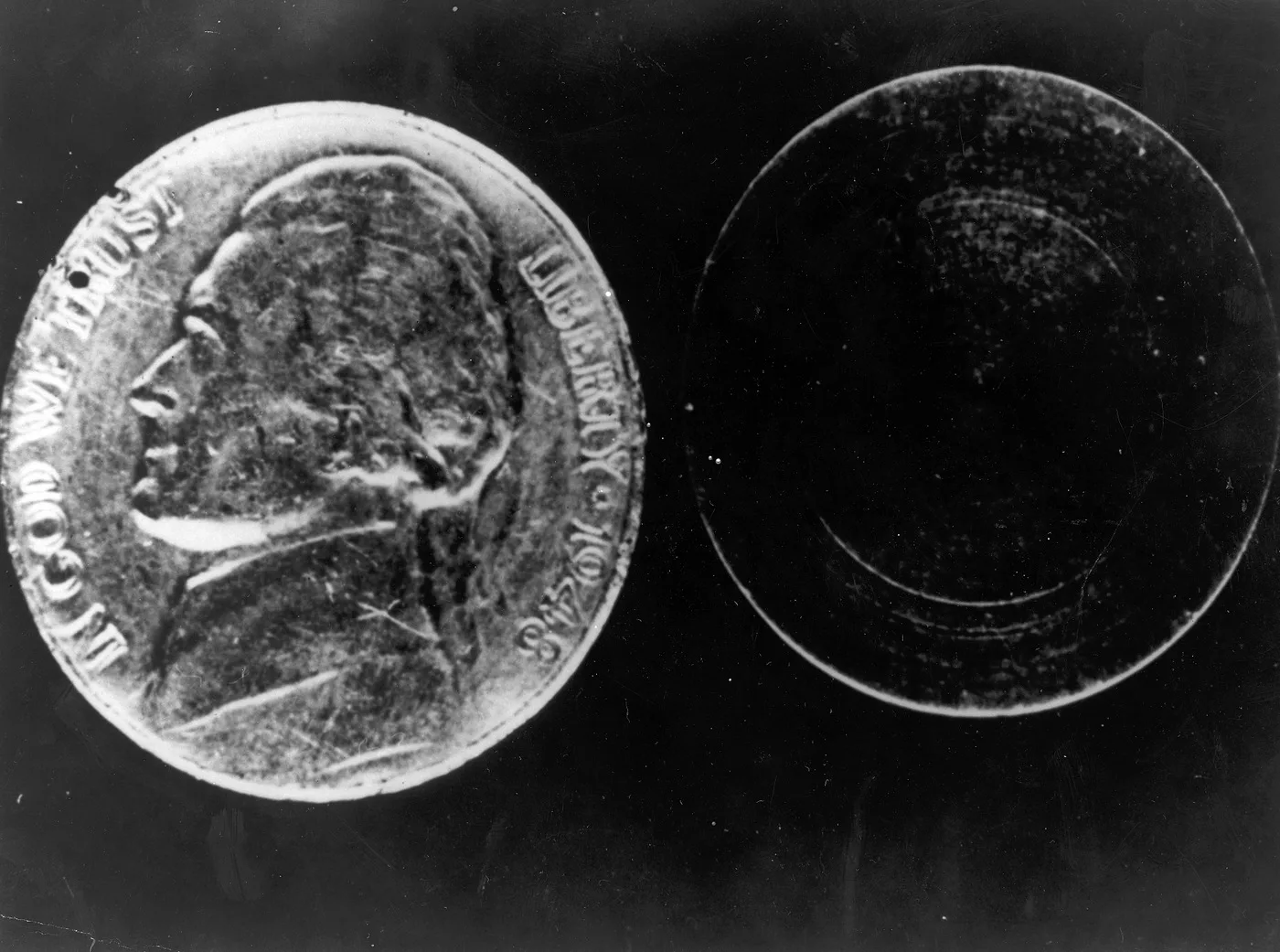
What it stops: everyone who isn’t looking for it, which is nearly everyone. What it doesn’t: the hiding place getting spent, dropped or lost, which is exactly how this one was found. A coin holds a scrap of film or a memory card and nothing else, and it shows the weakness of every clever hiding place: it only works while the owner keeps track of it.
3. Behind a light switch
The fake socket safe sounds like a modern gadget. It isn’t. In 1908 John C. Brucklacher of Louisville, Kentucky, applied for a patent on a safe “intended to be embedded in the wall of a building” with a cover that presented “the appearance of an electric circuit closer”, a light switch, but wasn’t wired to anything. The point, he wrote, was that it should be “disguised in such a way that a burglar shall not suspect the presence of said safe”. He got his patent in 1910.10
Today’s version is the fake wall socket or air vent with a small box behind it. None of the specialist safe dealers we checked sells one, and the ones sold online are mostly plastic, so we haven’t listed any. If you want something in the wall that locks, a real wall safe behind a picture (number 6) does the same job with steel.
What it stops: a search that doesn’t think to unscrew a faceplate. What it doesn’t: anyone who does, and there’s nothing to resist them once they have. Fit one in a wall cavity well away from real wiring, and if you aren’t sure what’s behind the plasterboard, ask an electrician first.
4. In a tin, a book or a cereal box
This is the classic diversion safe: a real-looking container with a false bottom or a screw lid, weighted so it feels full. Book safes are the oldest version, and we’ve traced them from 17th-century boxes made to look like books to wartime escape aids in our history of book safes. Fake tins of fruit, cans of fizzy drink and bottles of household cleaner followed.11
If you want a lock as well as a disguise, Barska’s Hidden Dictionary Book Lock Box is a key-locking steel box “disguised as a dictionary”, $50.99 at Safe and Vault Store; the listing gives no size or steel thickness.12 It keeps a curious child out. It won’t keep out anyone with a screwdriver.
The trouble is that burglars know about them. In 2017 the Portland TV station KGW polled 86 convicted burglars, and one listed the common hiding places he’d check: “From the stove, to the freezer, to the fish tank and toilet tank, book shelves and boxes of cereal”.13 What it stops: children, guests, a cleaner, a nosy relative. What it doesn’t: a burglar with a few minutes in your kitchen. Put a diversion safe somewhere it fits in, and in a room that isn’t the first one searched.
5. In the fireplace
Safes have sat beside fireplaces for a long time: Dickens gives the tailor in Great Expectations “a prosperous iron safe let into the wall at the side of his fireplace”, as we noted in our wall safe history.14 In 1923 Herman S. Burnett of Bristol, Virginia, went a step further and applied for a patent on “wall or chimney safes” built into the mantelpiece itself. The safe’s cover plate was finished to match the mantel, “giving the mantle as a unit a conventional appearance”, and even the keyhole had a removable plug made to blend in. The patent was granted in 1925.15
What it stops: a search of the room that treats the chimney breast as solid. What it doesn’t: heat. A box in a fireplace that’s actually used needs to be built and insulated for it, and nothing on sale today that we found is made for the job. If you have an old house with a sealed-up fireplace, a builder can tell you what’s behind it; anything more is a job for a safe engineer, not a weekend.
6. Behind a picture or a mirror
The wall safe behind a painting is so familiar from films that it’s almost a joke, and it was a cliché a century ago. Meilink of Toledo told readers of The Literary Digest in 1910 to “Hide it in a closet, or behind a picture or piece of furniture if you like”. Montgomery Ward’s 1915 catalogue sold a $9.85 steel wall safe with the line “May be concealed behind a picture”, and the same year a film review in Motography described the plans in an Essanay drama kept “in a wall safe concealed behind a picture frame”.161718
Today it’s the between-stud wall safe, from about $200 for a basic electronic one19 to $505 for Mycube’s fingerprint In-Wall, which is 6½ inches deep, bolts to the studs and isn’t fire rated.20 Our guide to wall safes between studs compares the models and explains how to fit one.
A mirror does the same job as a picture and is less likely to be lifted. The Go Secret Storage sliding mirror, $560 unfinished or $600 painted, slides sideways on ball-bearing runners to show a shallow compartment between the studs, with a hidden latch behind the top edge; there’s a version made to cover SnapSafe’s tall wall safe.2122 Tactical Walls, a family-owned firm in Virginia’s Shenandoah Valley, makes the 1450 Framed Concealment Mirror from HDPE plastic with a hardwood frame and a magnetic lock, standing 1.25 inches proud of the wall, at $799 ($639.20 in its Black Friday sale).2324 Neither is steel. For a steel box behind the mirror, SnapSafe’s In-Wall Safe has a 16-gauge body and an 8-gauge door with an electronic lock and key backup, at $319.99, or $489.99 for the 44-inch Tall version.25
What it stops: guests and a casual look round. What it doesn’t: a burglar who lifts the pictures, because that’s the first place a film has taught everyone to look. Choose a dull picture in a dull room, not the one over the bed.
7. Behind a bookcase
The most famous bookcase door in the world hid people, not valuables. In August 1942 Anne Frank wrote that the entrance to the Secret Annex in Amsterdam had been covered by “a cupboard on hinges that can open like a door”, built by Johan Voskuijl, the warehouse manager. A wooden bobbin on a rope at the back was used to pull it open. The original is still in the museum.2627
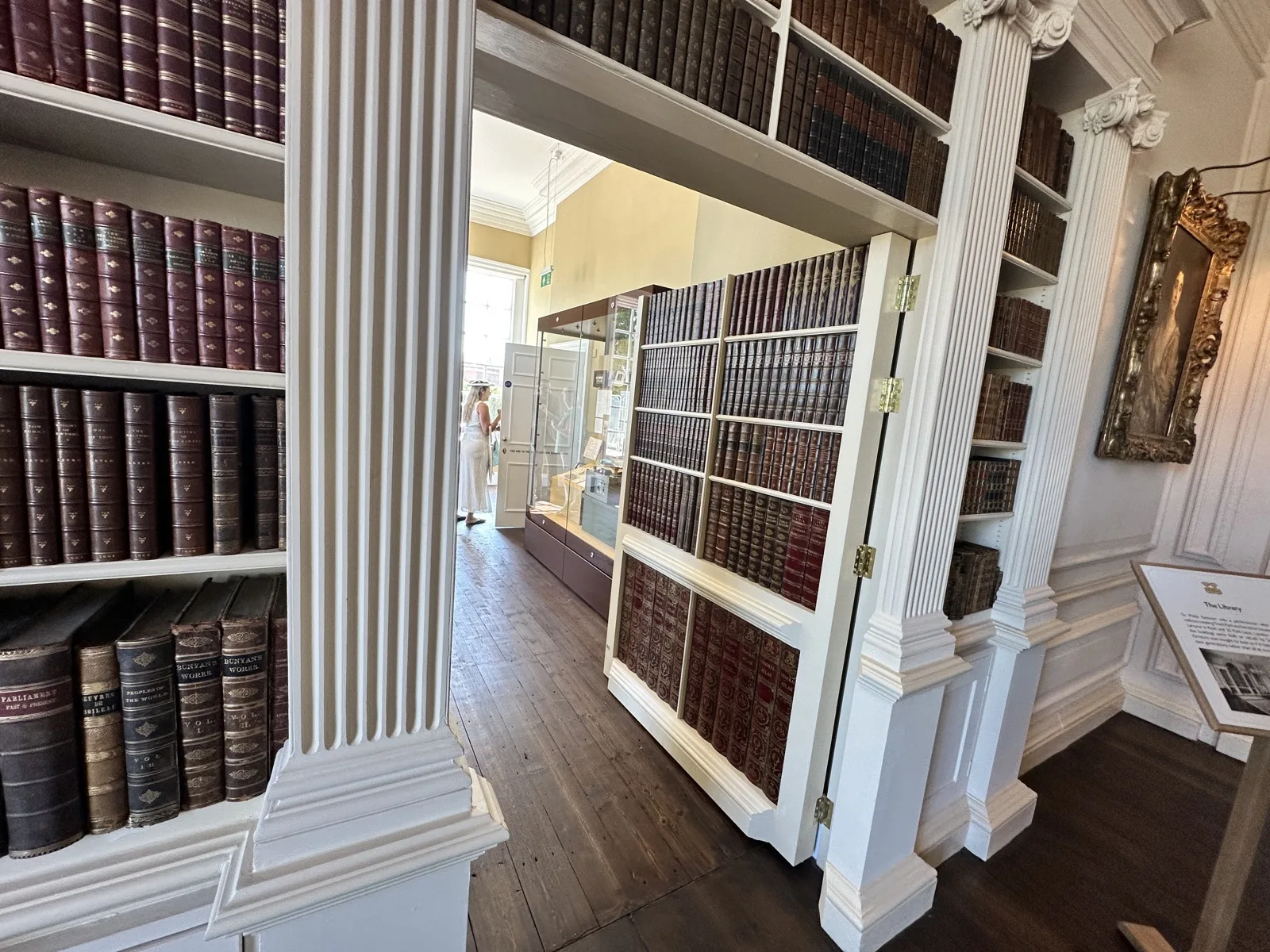
Bookcase doors also turn up in English country houses, like the library at Trent Park in north London in the photograph near the top of this page. From 1942 the same house held captured senior German officers in deliberate comfort, while refugees in the basement recorded their conversations “through hidden microphones”.2829 The bookcase wasn’t the secret there; the walls were.
You can buy one ready-made. Murphy Door, which builds them in Utah and Kentucky, sells its Hidden Bookcase Door for $1,685, plus freight from $349. The hinge system is tested to 1,540 lb and the shelves are rated for 400 lb of books on doors up to 36 inches wide; the firm says its hidden doors start at $1,000.3031
A bookcase door hides a room; it doesn’t protect it. If what’s behind it is worth stealing, the room needs a real door too. SnapSafe, the Hornady brand, makes in-swing vault room doors such as the 75416, and Steelhead Outdoors builds its Homestead vault door; both are covered in our closet safe guide. What it stops: a search of the room. What it doesn’t: anyone who taps the wall, measures the house, or notices a draught.
8. Inside a piece of furniture
Cabinetmakers were hiding compartments in desks long before anyone made a steel safe, and we’ve covered the Roentgens, the Wooton desk and how to look for a secret drawer in hidden compartment furniture. In 1885 Frank Shannon of Middleport, Ohio, went further and patented a chest of drawers with an actual locked strong box inside, hidden so that “its presence will not be detected by the opening of the drawers”, as “a safe repository for jewelry and other articles of value”.32
The modern version is “concealment furniture”: shelves, mirrors, even wall-mounted flags with a compartment behind. The Lockdown In Plain Sight shelf, $131.99 at Safe and Vault Store, is a 24-inch wall shelf whose front drops open when you swipe a magnet over a hidden latch; the shelf takes 20 pounds on top.33 It’s wood held shut by a magnet, so think of it as a hiding place with a catch, not a lock.
What it stops: a search that opens every drawer and finds nothing odd. What it doesn’t: a thief who takes the whole piece, or a buyer at a house clearance who finds it years later. Furniture is made to be moved, and a compartment inside it is only as secure as the wood around it.
9. In or under the bed
In 1874 Julia B. French of Boston patented a bedstead with drawers underneath, and in the wall dividing the drawers a box with a lid that could only be opened by lifting out the bed bottom. “The box would thus form a secret compartment,” she wrote, “where valuables could be stored and safely kept.”34 Today’s version is the under-bed safe, a long, flat steel drawer that slides under the frame.
SnapSafe makes its Under Bed Safe in two sizes: the Medium, 5 inches high, 26 wide and 20 deep, at $478.99, and the Large, 6 x 40 x 22 inches and 105 pounds, at $632.99. Both are 14-gauge steel with a 3 to 8 digit electronic lock, a key backup, pre-drilled holes for bolting down and a 5-foot cable.35 Steelhead Outdoors builds heavier ones in Shakopee, Minnesota. Its Undercover 40X, $1,150, is 40 x 16 x 6 inches and 95 pounds, with a 38 x 13 x 4 inch drawer, 12-gauge steel outside and a fully mechanical Simplex push-button lock, “no batteries, no electronics to fail”. The 48E, $1,400, swaps in a fingerprint lock.3637
Here’s the catch. The bedroom is where burglars start. In a study of 50 experienced UK burglars, two thirds described the same search pattern, “beginning with the master bedroom and finishing with the kitchen”.38 KGW’s American burglars said the same: “Across the board, burglars said they go to the master bedroom first”, and one listed “beds, drawers, closets and boxes”.13 Avon and Somerset Police advise putting a home safe somewhere concealed, “but avoid placing it in your bedroom”.39 What it stops: children and guests, and an under-bed safe bolted to the floor slows a burglar down. What it doesn’t: hide anything from a burglar for long. If you keep a gun by the bed, our guide to nightstand and in-drawer safes covers the quick-access options.
10. Under the floor
A safe set into a concrete floor is the one hiding place on this list that also has real strength: only the door is exposed, and nobody carries off a slab. Old ones turn up under carpets and floorboards in shops, offices and houses, and our guide to old floor safes covers who made them, how to date one and what to do if you find one in a house you’ve bought.
A new one costs less than you might think, plus the concrete. Stealth’s B2500, $849.99 at Safe and Vault Store, is made to be set in concrete on five sides, leaving only its half-inch steel plate door with three 1-inch bolts showing. The listing calls it “B-Rated”, and adds: “Just put a rug over the top to keep it hidden”.40 Bear in mind that a B-rate is a description, not a test: the same dealer says of the B-rate that “No tests are given to provide this rating”.41
What it stops: a thief who wants to carry the safe away, and a search that doesn’t lift the rug. What it doesn’t: damp, if it’s fitted badly, and your own knees: it’s the least convenient safe to open every day. Note that “floor safe” in US shops often means a safe that stands on the floor, not one set into it.
11. In the walls of the house: the priest hole
The best hiding places ever built in England were made for people. After 1585 a Jesuit or seminary priest found in England could be executed for treason simply for being there, and for some seventeen years the carpenter Nicholas Owen’s “chief employment” was building hiding places for them in Catholic houses.4243 Father John Gerard, who knew him well, wrote that he never spoke about the houses he’d worked in, and “did much strive to make them of several fashions in several places, that one being taken might give no light to the discovery of another”.43 The whole story is in our article on priest holes.
Owen’s rule still holds four centuries later. A hiding place everyone sells, everyone has seen, and every burglar has heard about is no longer a hiding place. One made to suit your house, and told to nobody but the person who needs to know, is the closest thing to his.
“That one being taken might give no light to the discovery of another.”
John Gerard on Nicholas Owen’s hiding places
What hiding a safe stops, and what it doesn’t
A burglary is usually quick. In a 2012 survey of 422 burglars in prison in North Carolina, Kentucky and Ohio, researchers at the University of North Carolina at Charlotte found most burglaries took less than ten minutes, and cash was what most of them wanted, followed by jewellery.44 Ten minutes is the window a hiding place has to survive. Within it, an odd hiding place in an unexpected room does well; a known one in the bedroom does badly.
Hiding does
Buy you time
A thief in a hurry takes what’s easy to find. Every minute spent searching is a minute closer to being caught, and the search has to end somewhere.
Hiding doesn’t
Stop fire or tools
Once found, a diversion safe opens with a twist. Most hidden safes have no fire rating, and insurers don’t rate hiding places at all.
Best of both
Hide a real safe
Police advice is a concealed safe, bolted to a wall or floor, out of the bedroom. That’s a rated safe in an odd place, not a tin.
The last point is the one people forget. A safe that nobody else knows about can stay hidden for good: in a wall you’ve plastered over, under a floor someone else carpets, inside a desk sold at a house clearance. Leave a note with your will, or tell one person you trust. If you’ve found someone else’s forgotten safe, our guide for owners of an old safe covers what to do next.
Did you know?
Asked what they hunted for, one of KGW’s burglars said: “My main thing I hunted for once in a home is a safe or locked box”. Another expected to find “safes in the closet”.13 A visible safe tells a burglar where to spend the ten minutes, which is the best argument for hiding one.
Nobody would ever think to look there.
One convicted burglar listed the freezer, the toilet tank, bookshelves and cereal boxes as places he’d check.
A diversion safe is a kind of safe.
It’s a container that looks like something else. Once found, it opens without a fight, and insurers don’t count it.
The bedroom is the safest place for valuables.
It’s where burglars start. UK police advise keeping a home safe out of the bedroom.
A headrest safe is crash-tested, so it’s secure.
FMVSS 202a is about protecting your neck in a collision. It says nothing about resisting a thief.
Frequently asked questions
Where is the best place to hide a safe?
Not the main bedroom or its closet, where burglars start. UK police advise a concealed spot, with the safe fixed to a solid wall or floor; after that, the less obvious the room, the better.
Do diversion safes actually work?
Against children, guests and a quick look, yes. Against a burglar, less well: convicted burglars name tins, cereal boxes and books as places they check. Keep small amounts of cash in one and put anything irreplaceable in a real safe.
What is a headrest safe?
A car headrest with a small steel safe inside, which replaces the original on a two-post seat and locks into it. The Headrest Safe sells three models from $349 to $399 a pair, all sized for a full-size pistol. It hides things well but has no burglary rating.
Is a hidden wall safe worth it?
For cash, passports and spare keys, it’s a good mix of hiding and a lock. Most are thin steel held by a few screws and have no fire rating, so they won’t stand up to tools for long. Our wall safe guide compares them.
How much does a hidden bookcase door cost?
A ready-made one from Murphy Door costs $1,685 plus freight, and the firm says its hidden doors start at $1,000. A bookcase door hides a room; if the room holds valuables, it needs a proper lock or a vault door as well.
Are hidden safes covered by home insurance?
Insurers rate safes by their certified grade, not by how well they’re hidden. A diversion safe or a box inside furniture doesn’t count; a certified safe fitted as the insurer requires does. Ask your insurer before you rely on either.
How we put this together: we haven’t tested any of these products. Prices and specifications come from the makers’ and sellers’ pages, checked on 20 November 2026; the history comes from patents, museum pages and the sources listed below. Our method is set out in how we research modern safes.
Sources:
- The Headrest Safe, “Headrest Safe Frequently Asked Questions” (based in Homewood, Alabama; “locks into place with a toggle bolt that deploys when inserted into the seat”; lock battery lasts about a year). Seen 20 November 2026. ↩︎
- The Headrest Safe, “About The Headrest Safe” (opened by fingerprint, a 4 to 8 digit code or a key; “pull down on the invisible seam”). Seen 20 November 2026. ↩︎
- The Headrest Safe, “The Compact Set” (20 gauge steel safe, 16-gauge door; keypad “hotel style lock”; outside 8 x 5.5 x 10.75 in, inside 5.5 x 3.5 x 7.5 in; $349 per set). Seen 20 November 2026. ↩︎
- The Headrest Safe, “The Vulcan Set” (18 gauge steel safe, 16-gauge door; biometrics, keypad or key; outside 8.75 x 6.5 x 11.25 in, inside 6 x 3.5 x 8.5 in; “Safety tested to FMVSS 202a standards”; $379 per set of two headrests). Seen 20 November 2026. ↩︎
- The Headrest Safe, “The Slide Set” (removable inner safe that slides out of the headrest housing; 18 gauge steel, 16-gauge door; biometrics, keypad or key; outside 9 x 5.5 x 12 in, inside 6 x 3.25 x 7.5 in; $399 per set). Seen 20 November 2026. ↩︎
- Everytown Research & Policy (Nick Szkola, Mike O’Toole and Sarah Burd-Sharps), “Gun Thefts from Cars: The Largest Source of Stolen Guns”, 9 May 2024 (FBI NIBRS data; “at least one gun is stolen from a car every nine minutes”; in 2022 “just over half (51 percent) were stolen from cars”). Everytown is a gun-control advocacy group. Consulted 20 November 2026. ↩︎
- The Headrest Safe Company, LLC, “Our Customer Support/Warranty Policy” (one-year limited warranty for the original US purchaser; 30-day money-back guarantee). Seen 20 November 2026. ↩︎
- US Code of Federal Regulations, 49 CFR 571.202a, Standard No. 202a: Head restraints (“requirements for head restraints to reduce the frequency and severity of neck injury in rear-end and other collisions”). Consulted 20 November 2026. ↩︎
- Federal Bureau of Investigation, “Hollow Nickel/Rudolf Abel”, FBI History, Famous Cases (read via the archived copy of 11 January 2024). ↩︎
- John C. Brucklacher, Louisville, Kentucky, US Patent 968,536, “Safe”, filed 25 June 1908, granted 30 August 1910 (a wall safe whose cover presents “the appearance of an electric circuit closer”). ↩︎
- Bruce Schneier, “Can Safes”, Schneier on Security, 28 April 2010. ↩︎
- Safe and Vault Store, Barska AX11680 Hidden Dictionary Book Lock Box (steel, key lock; $50.99). Seen 20 November 2026. ↩︎
- KGW Staff, “What burglars do first when they get inside your home”, KGW8, Portland, Oregon, 29 March 2017 (survey of 86 convicted burglars; read via the archived copy of 16 January 2021). ↩︎
- Charles Dickens, Great Expectations, chapter 19. Project Gutenberg eBook #1400. ↩︎
- Herman S. Burnett, Bristol, Virginia, US Patent 1,546,884, “Vault”, filed 30 April 1923, granted 21 July 1925 (“wall or chimney safes” built into a mantel). ↩︎
- Advertisement, “Meilink’s Steel Wall Safe”, The Literary Digest, 4 June 1910, p. 1154 (“Hide it in a closet, or behind a picture or piece of furniture if you like”). ↩︎
- Montgomery Ward & Co., Book of Homes, 1915, p. 75, “Steel Wall Safe, $9.85” (“May be concealed behind a picture”). ↩︎
- Review of Essanay’s Thirteen Down, Motography, 6 February 1915, p. 201 (“the plans in a wall safe concealed behind a picture frame”). ↩︎
- Safe and Vault Store, Hollon WSE-2114 listing (22.19 x 14.94 x 4.00 in including the flange; 1/8 in steel door; electronic lock with key override; $199.00). Seen 19 November 2026. ↩︎
- Mycube, Mycube In-Wall (outside 18 x 14.25 x 6.5 in, 36 lb, “Not fire rated”, bolts to the wall studs; $505 in the sale, list $595). Seen 20 November 2026. ↩︎
- Safe and Vault Store, Go Secret Storage Full Length Sliding Concealment Mirror (fits standard 14½ in stud openings; ball-bearing slides; $560 unfinished, $600 finished). Seen 20 November 2026. ↩︎
- Safe and Vault Store, Go Secret Storage sliding mirror cover for the SnapSafe Tall Wall Safe (hidden latch behind the top edge; $560 unfinished). Seen 20 November 2026. ↩︎
- Tactical Walls, 1450 Framed Concealment Mirror (HDPE with a hardwood frame; magnetic lock; extends 1.25 in from the wall; $799, $639.20 in the Black Friday sale). Seen 20 November 2026. ↩︎
- Tactical Walls, “Home defense philosophy” (“a family-owned and veteran-operated business, based in the Shenandoah Valley of Virginia”). Consulted 20 November 2026. ↩︎
- SnapSafe (Hornady), In-Wall Safes (No. 75413, 22 x 16.25 x 4 in, $319.99; Tall No. 75414, 44 in high, $489.99; 16 gauge body, 8 gauge door; electronic lock with key backup). Seen 20 November 2026. ↩︎
- Anne Frank House, “The bookcase” (“The revolving bookcase was made in 1942 by warehouse manager Johan Voskuijl”). Consulted 20 November 2026. ↩︎
- Anne Frank House, “Bobbin used to open and close the bookcase” (quotes Anne Frank, 21 August 1942: “a cupboard on hinges that can open like a door”). Consulted 20 November 2026. ↩︎
- Trent Park House of Secrets, “About” (from 1942 captured senior German officers were held at the house and recorded “through hidden microphones”). Consulted 20 November 2026. ↩︎
- Matt Brown, “Secret library door, Trent Park House 2026-07-20”, Wikimedia Commons, CC BY 4.0. ↩︎
- Murphy Door, Hidden Bookcase Door ($1,685, shipping from $349; hinge system “tested to 1,540 lb”; 400 lb shelf load on doors up to 36 in wide; hand-built in Utah and Kentucky since 2012). Seen 20 November 2026. ↩︎
- Murphy Door, home page FAQ (“Murphy Door hidden doors start at $1,000”). Seen 20 November 2026. ↩︎
- Frank Shannon, Middleport, Ohio, US Patent 331,163, “Household-Furniture”, filed 11 August 1885, granted 24 November 1885 (a locked strong box concealed in a bureau). ↩︎
- Safe and Vault Store, Lockdown In Plain Sight Concealment Shelf (3.25 x 24 x 11.75 in; magnetic latch; holds up to 20 lb; $131.99). Seen 20 November 2026. ↩︎
- Julia B. French, Boston, Massachusetts, US Patent 152,357, “Improvement in Bedsteads”, granted 23 June 1874 (hollow bed rails forming “a secret compartment, where valuables could be stored and safely kept”). ↩︎
- SnapSafe (Hornady), Under Bed Safe (Medium No. 75402, 5 x 26 x 20 in, 51 lb, $478.99; Large No. 75401, 6 x 40 x 22 in, 105 lb, $632.99; 14 gauge steel; 3 to 8 digit code with key backup; 5 ft cable). Seen 20 November 2026. ↩︎
- Steelhead Outdoors, Undercover 40X (40 x 16 x 6 in, 38 x 13 x 4 in drawer, 95 lb; full 12 gauge exterior; mechanical Simplex lock; four anchor holes; made in Shakopee, Minnesota; $1,150). Seen 20 November 2026. ↩︎
- Steelhead Outdoors, Undercover 48E (Securam ScanLogic fingerprint and keypad lock; $1,400). Seen 20 November 2026. ↩︎
- British Psychological Society, Research Digest, “The expert mind of the burglar”, 1 September 2006, summarising Claire Nee and Amy Meenaghan, “Expert decision making in burglars”, British Journal of Criminology 46 (2006) (50 experienced burglars; “Two thirds of the burglars described the same search pattern, beginning with the master bedroom and finishing with the kitchen”). Consulted 20 November 2026. ↩︎
- Avon and Somerset Police, “Keeping your belongings safe”, crime prevention advice (“Position the safe in a concealed location, but avoid placing it in your bedroom, as this is often the first place a burglar will search”). Consulted 20 November 2026. ↩︎
- Safe and Vault Store, Stealth B2500 Heavy Duty Floor Safe (set in concrete on five sides; 1/2 in steel plate door, three 1 in bolts; “B-Rated”; $849.99). Seen 20 November 2026. ↩︎
- Safe and Vault Store, “Burglary ratings” (on the B-rate: “No tests are given to provide this rating”). Consulted 20 November 2026. ↩︎
- “Act against Jesuits and Seminarists, A.D. 1585. 27 Elizabeth, cap. 2”, transcribed from Statutes of the Realm in Henry Gee and William John Hardy, Documents Illustrative of English Church History (Macmillan, 1896), no. LXXXV, pp. 485 to 492. ↩︎
- John Gerard SJ, The Condition of Catholics under James I: Father Gerard’s Narrative of the Gunpowder Plot, ed. John Morris (Longmans, Green, 1871), pp. 182 to 188 (Nicholas Owen). ↩︎
- Kristie R. Blevins, Joseph B. Kuhns and Seungmug Lee, “Understanding Decisions to Burglarize from the Offender’s Perspective”, Department of Criminal Justice and Criminology, University of North Carolina at Charlotte, December 2012 (422 incarcerated burglars; “Most burglars (79%) reported an interest in acquiring cash”, then “jewelry (68%)”; “Most of the burglaries were quick (less than 10 minutes)”). ↩︎
The History of Safes letter
One old safe a month, in your inbox
Once a month I send one safe worth a closer look, the new maker histories and a find from the patent and advert collection. Nothing else, and you can leave with one click.
You'll get a confirmation email first. One email a month, unsubscribe any time. Privacy policy.


