

Over Valentine’s weekend 2003 thieves emptied more than a hundred safe deposit boxes in the basement vault of the Antwerp Diamond Center. Here’s what the Belgian courts found, how the case was cracked, and why the thief’s own famous version isn’t the same story.
109
safe deposit boxes forced, out of 189
€100m
the justice system’s estimate of the loot
4
Italian men convicted by the Antwerp court of appeal
10 years
for the leader, Leonardo Notarbartolo
Key takeaways
- On the night of 15–16 February 2003 thieves broke open 109 of the 189 safe deposit boxes in the vault of the Diamond Center on Schupstraat, Antwerp.
- The loot was put at about €100 million. It has never been recovered, so nobody can prove the true figure.
- In May 2005 the Antwerp court of appeal jailed Leonardo Notarbartolo for ten years as the gang’s leader, and three other Italians for five years each.
- The case broke open the morning the raid was discovered, when a grocer found bags of dumped rubbish from the vault on his land beside the E19 motorway.
- Notarbartolo’s 2009 account in Wired, an inside job for insurance money, is his story. The lead detective said not one detail of it could be confirmed.
In This Article
The Antwerp diamond heist at a glance
| What | Burglary of a safe deposit vault |
| Where | Basement vault of the Diamond Center, Schupstraat, in Antwerp’s diamond district, Belgium |
| When | The night of 15–16 February 2003 (Valentine’s weekend) |
| Discovered | Monday 17 February 2003 |
| Boxes | 109 of 189 forced (court reporting, 2006); first reports said 123 of 160 |
| Value taken | About €100 million (justice system’s estimate); disputed |
| Recovered | None of the loot, as of 2013 |
| Convicted | Leonardo Notarbartolo, Ferdinando Finotto, Elio D’Onorio, Pietro Tavano (Antwerp court of appeal, May 2005) |
| Sentences | Notarbartolo 10 years and €1 million fine; the others 5 years and €5,000 each |
| Damages | €4.5 million to the civil parties, jointly |
| Acquitted | Two other defendants |
Sources for the table: the 2005 appeal judgment as reported by La Dernière Heure and IDEX, the 2006 ruling reported by Het Nieuwsblad, and Het Laatste Nieuws in 2013.1234 Wherever the books, films and the thief himself tell it differently, we say so below.
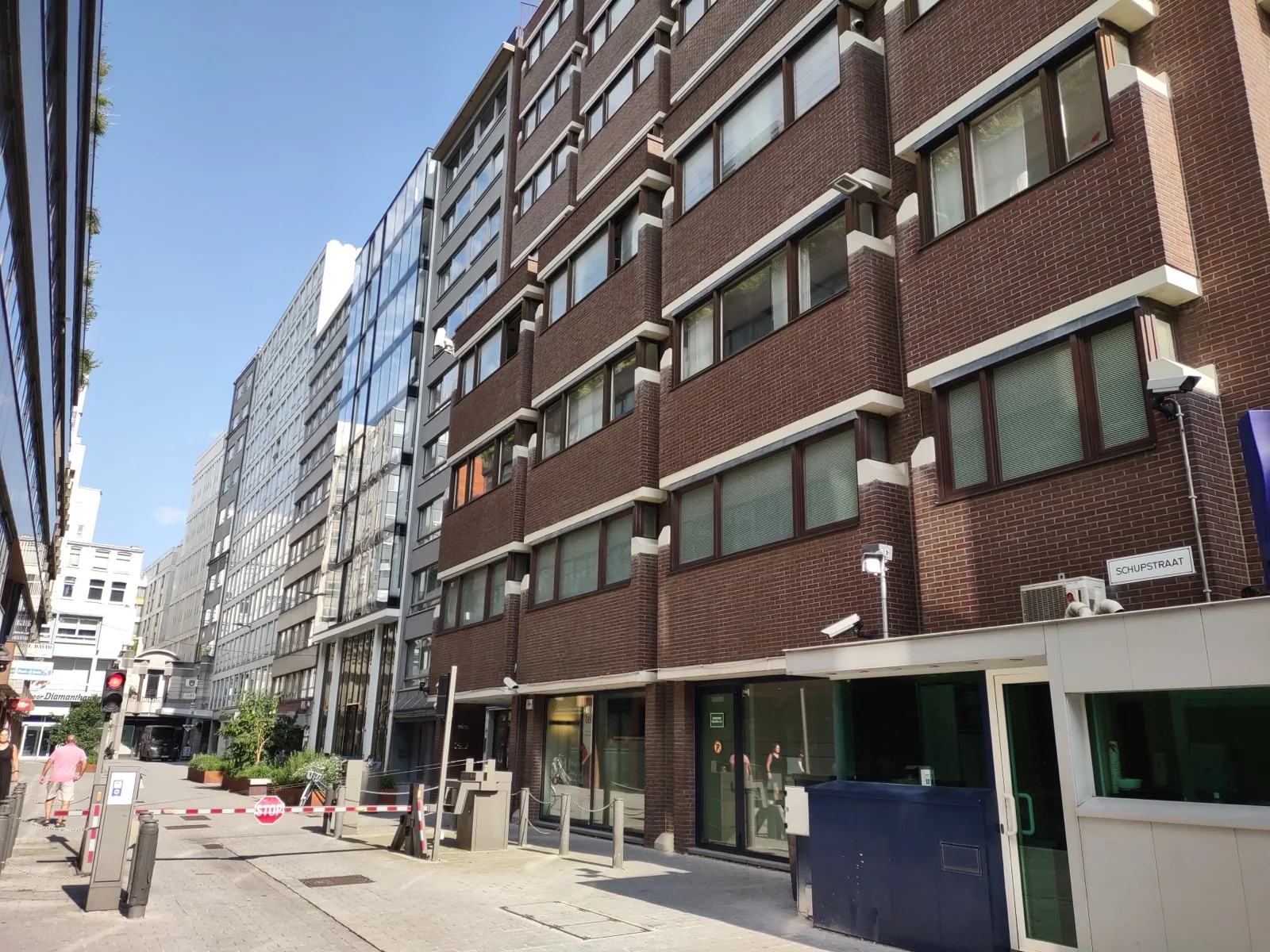
Antwerp’s diamond district and the Diamond Center vault
Antwerp has been a diamond town for about 600 years, and in 2003 the BBC put the share of the world’s diamonds that pass through it at some stage at around 80%.5 The trade is packed into a handful of streets. A De Beers spokesman described them the week of the raid as “extremely high security”: police at the pedestrianised entries, and stones moved about by armed couriers.5 A Boston Globe review of the book Flawless put the trade at $50 billion worth of stones changing hands in the city every year.6
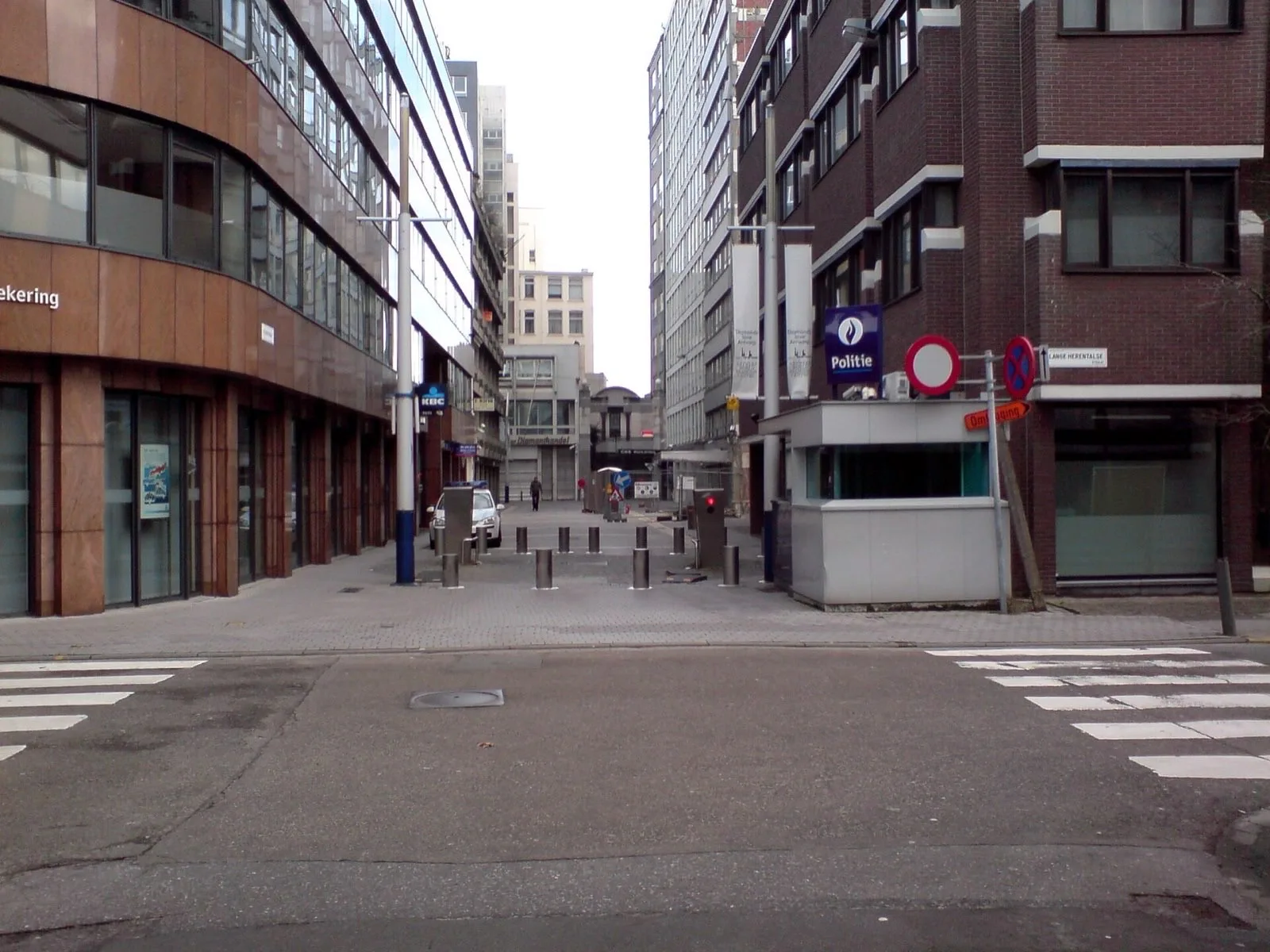
The Diamond Center stands on Schupstraat, in the middle of the district.1 ABC News called it the largest building in the district, and its vault sat underground.7 Its boxes were rented by diamond traders. When they came back to work on the Monday there was pandemonium in the vault, as the insurance investigator who later worked the case remembered it: people shouting that this box or that one was theirs, people crying, people fainting.7
What protected the vault
We’ll keep this at the level the published reporting does. According to the Boston Globe‘s summary of Flawless, the building had guards round the clock, a vault behind steel doors 18 inches thick, several locks that needed separate keys and combinations, and sensors for movement, vibration and heat.6 Locks that want both a key and the right setting are nothing new, by the way: Linus Yale and Charles Wilson’s 1843 combination lock already used a key to turn a set of notched discs.8 For how doors like this are built, see our guide to bank vault doors and time locks.
One thing we couldn’t find: a reliable source naming the maker of the Diamond Center’s vault door. Plenty of retellings describe it; none we checked cites a plate, a catalogue or a court document. So we’ve left the maker out rather than guess.
Why rent a box in a basement at all? For a dealer in a district like this, a box downstairs is a stockroom behind a strongroom door, and the same logic filled Hatton Garden’s vault with London jewellers’ boxes.9 Our guide to how safe deposit boxes work covers what renters actually get, and what they don’t. Many of the Antwerp goods weren’t insured, IDEX reported after the verdict, so for some box holders the loss was simply theirs.2
The Valentine’s weekend raid
This site doesn’t publish how a vault was attacked, only what happened and what it meant, so the account below stays with what police and courts said in public. Police told ABC News the thieves “methodically dismantled security measures one by one” to reach the main underground vault, then broke into more than 100 boxes. There was so much inside that they couldn’t carry it all.7
What they did carry is listed in the court reporting: more than ten kilos of gold bars, seven kilos of rough and polished diamonds, securities, coin collections, cash in several currencies and hundreds of pieces of jewellery.3 The BBC added that they also took the certificates that prove where a stone came from and what it’s worth.5 Nobody saw a thing until Monday morning, when a caretaker found the break-in.10
The early numbers were all over the place. Two days after the discovery, AFP reported that 123 of the 160 basement vaults had been emptied and the prosecutor’s office was still calling the case “very mysterious”; a Flemish paper thought the thieves must have had help from inside.10 By the time the case reached the appeal court, the figures in the reporting were 109 boxes forced out of 189.3 We use the later figures, but you’ll still see 123 in most articles.
Timeline
- c. 2001 Notarbartolo starts spending almost two years in an office in the Diamond Center, studying the building.
- 15–16 Feb 2003 The vault is emptied overnight, on Valentine’s weekend.
- 17 Feb 2003 The break-in is found; the same morning a grocer finds dumped bags of evidence beside the E19.
- Feb 2003 Notarbartolo is recognised in Antwerp and arrested.
- May 2005 The Antwerp court of appeal convicts four men; two others are acquitted.
- Mar 2006 The court confirms five years for D’Onorio and Finotto, who had been sentenced in their absence.
- 2009 Notarbartolo is released early on conditions, including compensating the victims.
- Jan 2013 He is arrested in Paris for breaking those conditions and returned to a Belgian cell.
Timeline sources: Het Nieuwsblad, La Dernière Heure and Het Laatste Nieuws.314 The start date is approximate: the court reporting says “almost two years” of preparation, not a month.
The rubbish by the E19, and the arrests
The vault gave the police very little. The motorway gave them a lot. On the Monday morning, while forensic officers were still working in the vault, a grocer from Flemish Brabant found plastic bags dumped on his private land in the Floordambos woods beside the E19 at Machelen, on the road between Antwerp and Brussels. Among them he saw diamond parcel slips and bundles of Indian rupees, realised this wasn’t ordinary fly-tipping, and called the police.3
The bags held business documents and a torn card bearing Elio D’Onorio’s name. Within a few weeks, Het Nieuwsblad reported, the investigators had pieced the whole raid together.3 Notarbartolo made it easier for them. About a week later he turned up in Antwerp with his wife and friends, was recognised by the Diamond Center’s porter, and was arrested. He said nothing about his accomplices. The loot had been shared out in a flat on Charlottalei, and from there it vanished.3
Did you know?
Pietro Tavano and Ferdinando Finotto, questioned in Italy, denied any part in the raid but gave DNA samples. Their DNA then turned up on objects in the Charlottalei flat and at the dump site in the woods.3
Most retellings mention a discarded sandwich, and Guinness World Records credits the gang’s downfall to DNA on it.11 The court reporting we could read doesn’t mention a sandwich at all. It names the documents, the torn card, the DNA from the flat and the woods, and the porter who knew Notarbartolo’s face.3 The sandwich may well be real; we just couldn’t find it in a court report.
The trial and the sentences
In May 2005 the Antwerp court of appeal found Leonardo Notarbartolo guilty of being the head of the criminal association behind the raid, and gave him ten years and a €1 million fine. Ferdinando Finotto, Elio D’Onorio and Pietro Tavano got five years and €5,000 each for preparing or carrying out the burglary. Two other defendants were acquitted.1 The four were also ordered to pay €4.5 million in damages to the civil parties.2
| Name | Finding | Sentence | Later |
|---|---|---|---|
| Leonardo Notarbartolo | Head of the criminal association | 10 years, €1 million fine | Sentence final after the Court of Cassation; released on conditions 2009, back in a Belgian cell 2013 |
| Pietro Tavano | Prepared or carried out the burglary | 5 years, €5,000 fine | Sentence final after the Court of Cassation |
| Ferdinando Finotto | Prepared or carried out the burglary | 5 years, €5,000 fine | Sentenced in his absence; confirmed March 2006 |
| Elio D’Onorio | Prepared or carried out the burglary | 5 years, €5,000 fine | Sentenced in his absence; arrested in Lisbon February 2006; confirmed March 2006 |
Three of the four weren’t in court. The appeal court ordered the immediate arrest of Finotto, D’Onorio and Tavano, who had been tried in their absence.1 Italy doesn’t extradite its own nationals, so for a while they stayed free at home. D’Onorio’s luck ran out in February 2006, when he was arrested in Lisbon on a stopover on the way to Cape Verde.3
The DNA story has a legal twist. D’Onorio’s genetic material was found in the vault itself, but Italian investigators had taken his underwear, comb and toothbrush from his home in Latina without his consent, and the court of appeal in Rome ruled that evidence unusable. In March 2006 the Antwerp court dealt with it in one line: even without that DNA, the facts were proven. It confirmed five years for D’Onorio and Finotto.3
Notarbartolo’s story and what the court found
Most of what the internet “knows” about this heist comes from one magazine article. In March 2009 Wired published Joshua Davis’s long feature, built on a jailhouse interview with Notarbartolo. In it, he said he hadn’t masterminded anything: he was in Antwerp to fence other stolen jewellery when a diamond dealer approached him and asked for the vault to be robbed so the dealer could claim on the insurance. He also said that when the gang got back to Italy, the bags were largely empty, because nearly everyone with stones in the vault had removed them in advance.12
It’s a great story, and that’s the trouble with it. The Columbia Journalism Review criticised Wired for giving readers Notarbartolo’s account without the police version, and pointed to evidence from the scene that didn’t fit it, such as the loot having been sorted inside the vault. Detective Agim De Bruycker, one of the lead investigators, told the magazine Davis had never checked the story with him or his partner, Patrick Peys. Davis said he hadn’t asked for the police view because he was exploring why Notarbartolo might lie; Wired‘s editor defended telling the story from the thief’s side.12
“Not one detail of Leo’s story can be confirmed by the facts in the investigation.”
Detective Agim De Bruycker, quoted in the Columbia Journalism Review, 2010
Notarbartolo told a version of it again on camera for Netflix in 2025, naming the man who supposedly commissioned the job only as “Alessandro”. The authorities interviewed in the same film said they had found no evidence for it.13 So we’ve kept the two apart on this page: the court’s findings in the sections above, his account here, labelled as his.
It was an insurance job set up by a diamond dealer.
That’s Notarbartolo’s own account. The lead detective said none of it could be confirmed, and the authorities say they found no evidence for it.
The thieves took exactly $100 million.
€100 million is the justice system’s estimate. The book Flawless cites experts at nearly half a billion dollars; Notarbartolo says much less. Nothing was recovered to settle it.
A sandwich convicted the gang.
The court reporting we found rests on dumped documents, a torn name card, DNA in a flat and the woods, and a porter who recognised Notarbartolo.
DNA from the vault convicted D’Onorio.
A Rome court ruled that DNA unusable. The Antwerp court said the facts were proven without it.
The gang got away with it.
Four men were convicted. The loot got away, not the thieves.
Sources for the myths: the Columbia Journalism Review on the Wired account, the author’s page for Flawless, and the Belgian court reporting.121431
What was never recovered
A year after the raid, ABC News was asking the two questions that still hang over the case: was the man in custody really the mastermind, and where were the diamonds?7 Ten years on, Het Laatste Nieuws could answer only half. None of the loot had ever been found.4
Notarbartolo was released early in 2009 on conditions, one of which was that he start compensating the victims. He hadn’t, according to the Antwerp prosecutor’s office, and a European arrest warrant followed in November 2011. On 29 January 2013 he was arrested at Charles de Gaulle airport in Paris, changing planes on the way from the United States to Turin, and France handed him back to Belgium to serve the remaining 1,443 days of his sentence.4 In 2025 The Brussels Times, citing Time, reported that he lived near Turin and ran a small wood pellet business.13
If you rent a box yourself, the practical point is the one Hatton Garden taught again twelve years later: a vault’s security protects the building, not your loss. Ask whether the contents are insured, and by whom, before you assume they are. Our guide to safe deposit box keys explains the two-key system most boxes use and what banks do when a key goes missing.
Antwerp and Hatton Garden compared
The two great safe deposit raids of the century look alike from a distance: a vault full of traders’ boxes, and a weekend with nobody about. Up close they’re different crimes.
| Antwerp, 2003 | Hatton Garden, 2015 | |
|---|---|---|
| Vault | Diamond Center, Schupstraat | Hatton Garden Safe Deposit Ltd, London |
| Timing | Night of 15–16 February (Valentine’s weekend) | Easter weekend, over two nights |
| Boxes opened | 109 of 189 | 73 of 996 |
| Estimated loss | About €100 million | Just under £14 million |
| Recovered | None | About a third |
| Way in | Past the vault’s security measures; the leader had an office in the building | Drilled through the vault wall |
At Hatton Garden the gang went round the door, drilling through the wall over Easter, and about a third of the haul was recovered.9 We tell that story in full in what really happened in the Hatton Garden heist. Antwerp also appears, with seven other raids that ended in court, in our list of failed bank robberies and heists that came undone. For the basics of how a strongroom is meant to hold out, see how bank vaults work.
Books, films and series about the Antwerp heist
The heist has been retold many times, and the versions don’t agree. Here’s the short list, if you want it on paper or on screen:
- Flawless: Inside the Largest Diamond Heist in History (2010). By Scott Andrew Selby and Greg Campbell. The Boston Globe said it was based on interviews with investigators, victims and several of the perpetrators.146
- Everybody Loves Diamonds (Prime Video, 2023). An eight-part Italian drama directed by Gianluca Maria Tavarelli, with Kim Rossi Stuart as Notarbartolo, inspired by the heist.15
- Stolen: Heist of the Century (Netflix, 2025). A 95-minute documentary based on Flawless, with Notarbartolo on camera alongside Flemish detectives.13
The drama is a drama, and the documentary gives the thief plenty of screen time. If you want the version that held up in court, the Belgian judgments as reported in 2005 and 2006 are still the firmest ground, and that’s what this page is built on.
Frequently asked questions
What was the Antwerp diamond heist?
The burglary of the safe deposit vault under the Antwerp Diamond Center on the night of 15–16 February 2003. Thieves forced 109 of the 189 boxes and took diamonds, gold, cash and jewellery estimated at about €100 million.
Who was Leonardo Notarbartolo?
An Italian who spent almost two years working from an office in the Diamond Center before the raid. The Antwerp court of appeal found him to be the head of the gang and sentenced him to ten years in 2005.
What is the School of Turin?
The name the press gave to a loose group of Turin-based thieves who robbed jewellers and banks. Belgian and American reporting linked the Antwerp gang to it; it isn’t a finding of the court.
Were the Antwerp diamonds ever found?
No. As of 2013 none of the loot had been recovered, and no later reporting we found says otherwise.
Is the Wired story of the Antwerp heist true?
It’s Notarbartolo’s own account, given from prison in 2009. The lead detective said not one detail of it could be confirmed by the investigation, so read it as his version, not the record.
Sources:
- La Dernière Heure, “De 5 à 10 ans pour le casse du siècle à Anvers” (19 May 2005), report of the Antwerp court of appeal judgment (in French; archived copy). ↩︎
- Edahn Golan, “Court Convicts Four in Antwerp Diamond Center Theft”, IDEX Online (22 May 2005). ↩︎
- Jan Heuvelmans, “Het blijft vijf jaar cel voor D’Onorio en Finotto”, Het Nieuwsblad (17 March 2006), report of the Antwerp court of appeal ruling of 16 March 2006 (in Dutch; archived copy). ↩︎
- Steven Peeters (Belga), “Brein achter ‘diamantkraak van de eeuw’ zit opnieuw in Belgische cel”, Het Laatste Nieuws (18 February 2013), confirmed by his lawyer and the Antwerp prosecutor’s office (in Dutch; archived copy). ↩︎
- BBC News, “Antwerp counts cost of gem heist” (20 February 2003), quoting Simon Gilbert of De Beers. ↩︎
- Jonathan Lopez, “Chronicling a grand diamond heist”, Boston Globe (6 February 2010), review of Selby and Campbell’s Flawless (archived copy). ↩︎
- ABC News, “Stolen Antwerp Diamonds Still Missing” (12 February 2004), quoting Antwerp police detectives Agim De Bruycker and Patrick Peys and insurance investigator Denise Oliver. ↩︎
- Linus Yale and Charles Wilson, US patent 3,312, “Combination safety-lock for doors” (20 October 1843), via Google Patents. ↩︎
- HHJ Christopher Kinch QC, sentencing remarks, R v Collins and others, Crown Court at Woolwich, 9 March 2016 (Judiciary of England and Wales). ↩︎
- Agence France-Presse via Dawn, “Biggest diamond heist” (20 February 2003), quoting Leen Nuyts of the Antwerp prosecutor’s office. ↩︎
- Guinness World Records, “Largest diamond heist” (record entry, February 2003, Antwerp). ↩︎
- Alexandra Fenwick, “Darts and Laurels”, Columbia Journalism Review (July/August 2010), on Joshua Davis, “The Untold Story of the World’s Biggest Diamond Heist”, Wired (March 2009), with comments from detective Agim De Bruycker. ↩︎
- Isabella Vivian, “Netflix’s latest Antwerp-based diamond heist: what’s the story?”, The Brussels Times (17 August 2025). ↩︎
- Scott Andrew Selby, Flawless: Inside the Largest Diamond Heist in History, author’s page for the book written with Greg Campbell (2010). ↩︎
- National Jeweler, “Amazon’s Antwerp Diamond heist series to debut in October” (7 September 2023). ↩︎
The History of Safes letter
One old safe a month, in your inbox
Once a month I send one safe worth a closer look, the new maker histories and a find from the patent and advert collection. Nothing else, and you can leave with one click.
You'll get a confirmation email first. One email a month, unsubscribe any time. Privacy policy.


